

From Back Rooms to Balance Sheets: College Football’s NIL Reckoning
Wheeling and dealing has been part of the fabric of college football for decades, long before NIL ever became a household acronym. Under-the-table arrangements were never some dark secret whispered only in back rooms; they were simply the sport’s worst-kept truth. The difference now is legality. What once lived in the shadows has been dragged into the sunlight, wrapped in compliance language, and governed by so-called “rules.”
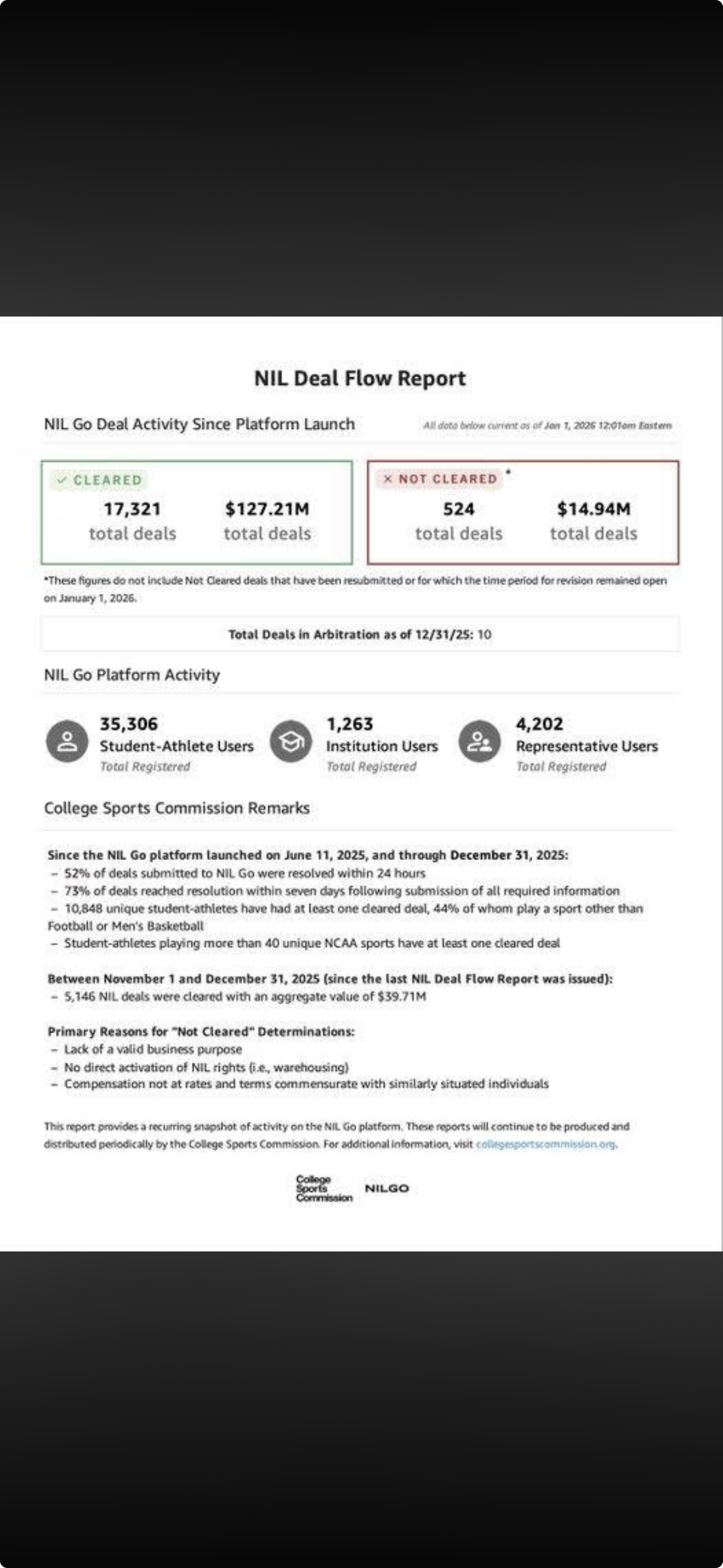
NIL flow chart.
When the College Sports Commission dropped its NIL flow chart, it jolted the system. Fans across the country did a double take. The numbers were staggering: 17,321 deals approved, totaling $127.21 million. That’s not pocket change—that’s real money reshaping the sport in real time. But just as eye-opening was what didn’t make the cut. The commission flagged 524 deals, totaling $14.94 million, and shut them down. That’s the new wrinkle in this era: security, scrutiny, and enforcement on the “illegal” deals.
This, precisely, was the point of the House settlement that went into effect last year. Its mission was simple in theory and complex in practice—sort the legitimate from the non-legitimate, bring order to chaos, and put teeth behind oversight. According to the commission’s own data, that’s exactly what it has done.
Once the new rules took hold, the ripple effects were immediate. Many schools shut down their NIL foundations altogether, or at least put meaningful distance between the athletic department and those entities. Clemson largely followed that path, pivoting toward commercial deals to secure their revenue-share cash. They weren’t alone. Across the country, schools have adopted similar models as they grapple with a very real phenomenon: “buyer fatigue” among donors.
If programs like Clemson can lean more heavily on commercial revenue rather than the deep pockets of individual boosters, they position themselves far better for the long haul. Sustainability matters now more than ever. And under the NCAA’s evolving framework, it’s fair to question whether donors or individuals can even influence player acquisition the way they did just one season ago. With school revenue sharing taking center stage and NIL becoming increasingly regulated, donors must tread carefully. The Wild West days are fading.
Clemson, in particular, has benefited from this shift. The Tigers struggled to rally NIL support in the early years, though some of that, frankly, stemmed from the head man digging his heels in on these issues. That resistance is no longer part of the equation. Clemson now has the financial muscle to maneuver—to recruit, to retain, and to protect the players they value. The results show up in portal acquisitions and, just as importantly, in keeping their core pieces intact.
There’s another subtle but significant detail worth noting. Clemson isn’t front-loading contracts. Instead, they’re leaning into incentive-based deals—less money on the front end, more upside on the back end if a player hits defined goals. It’s smart business. It keeps the upfront numbers balanced while sharpening player motivation. If the edge wasn’t there before, it is now.
More and more, this all feels familiar. The structure. The incentives. The money flow. It mirrors an NFL model, and that was always the destination. College football is simply catching up to its inevitable future. All that’s left for the rest of us is to sit back and watch the dollars fall.